
How to trade a Wyckoff spring

A Wyckoff spring is a dip under the floor of a range that closes straight back inside it, trapping the sellers. Here's how to spot it and where the stop and target go.

November 13, 2026·1:23·5 steps·YouTube Short

4.4· 46 ratings on the App StoreRated 4.4 out of 5

Tutorial

Step by step

5 steps. Press a step’s time to play the video from that moment, and tick steps off as you go.

0 of 5 done

  1. Step 1: Find a range

    Look for price that stopped falling and started moving sideways. Mark the floor and the roof of that range.

  2. Step 2: Watch the floor

    Price dips under the floor. Stops get hit and sellers jump in.

  3. Step 3: Look for a close back inside the range

    If that same candle closes back inside the range, that's the spring: the sellers are trapped. Enter on that close.

  4. Step 4: Stop under the spring's wick

    Place your stop just below the wick of the spring candle.

  5. Step 5: Target the roof of the range

    Aim for the top of the range you marked in step one.

Tips

  • If the next candle closes under the spring's low, it was never a spring. It's a breakdown, which is why the stop sits right under the wick.

Educational only, not financial advice. Every setup can fail, so trade with a stop and a plan.
About this video

The Wyckoff spring, in five steps 🪤 Part 7

1. Find a range: price stops falling and moves sideways. Mark the floor and the roof. 2. Watch the floor. Price dips under it, stops get hit, sellers jump in. 3. The same candle closes back inside the range. That's the spring: the sellers are trapped. Enter on that close. 4. Stop under the spring's wick. 5. Target the roof of the range.

What most traders miss: if the next candle closes under the spring's low, it was never a spring. It's a breakdown. That's why the stop sits right under the wick.

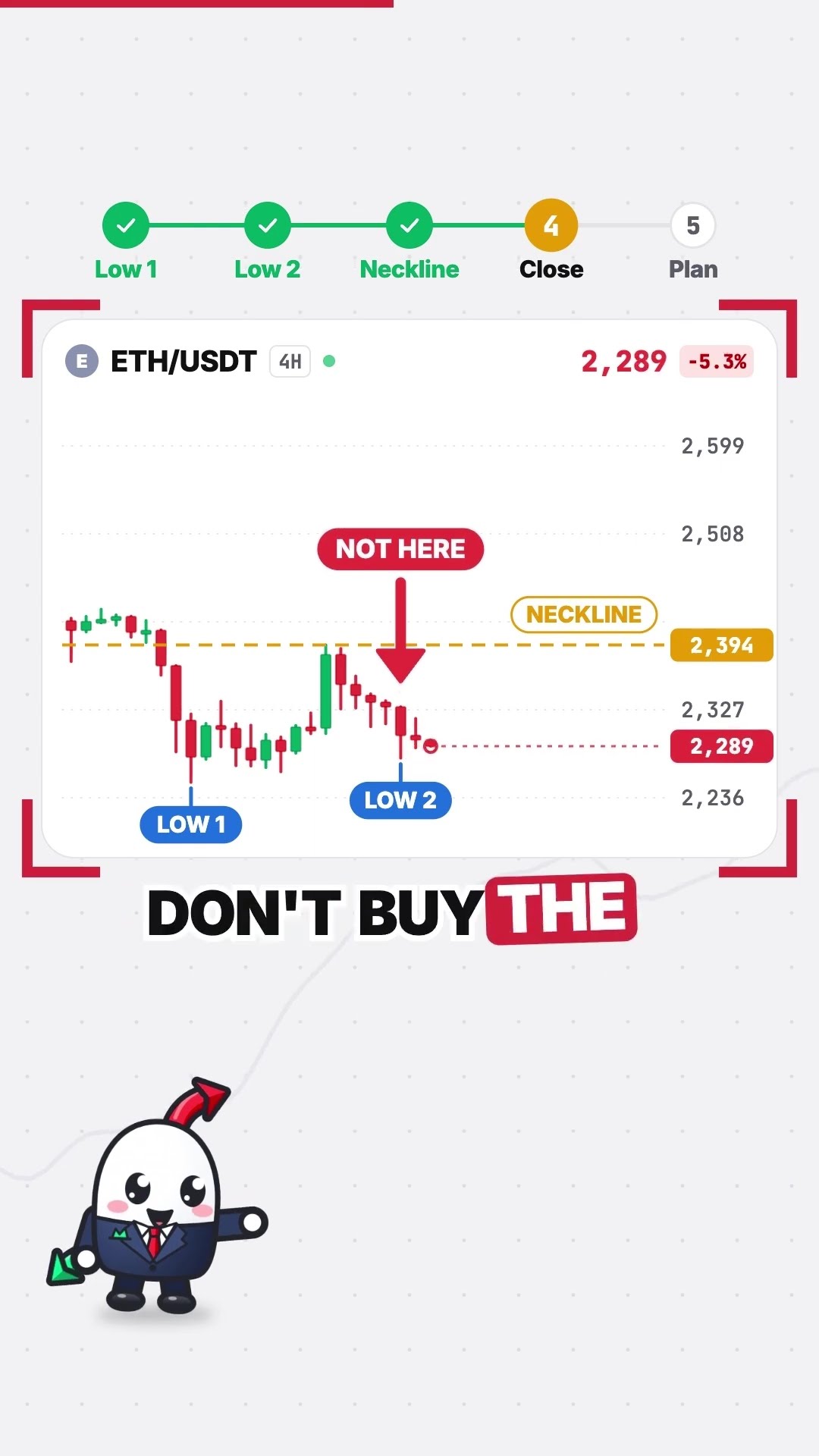
The charts are real: BTC/USDT 4H, 7 December 2025 (spring, roof reached two days later) and 16 October 2025 (closed under the low the next candle, then fell). One example, not a promise: no setup wins every time, so test it on your own charts before you trust it.

Educational only, not financial advice.

Watch on YouTube
Full transcript
  1. This is the only strategy you should use, part seven. That's what Wyckoff traders will tell you. It's called the spring.
  2. Give it a few seconds of your time and you'll spot the trap that often comes right before a move up. Step one, find a range. Price stops falling and moves sideways. Mark the floor and the roof.
  3. Step two, watch the floor. Price dips under it. Stops get hit. Sellers jump in. Step three, the same candle closes back
  4. inside the range. That's the spring. The sellers are trapped. Enter on that close. But first, pause. We just started this page. Follow, like, and repost now.
  5. Be a first fan before it blows up. Those we start with get every guide first. Step four, stop under the springs wick.
  6. Step five, target the roof of the range.
  7. Target hit. But here's what most traders miss. If the next candle closes under the springs low, it was never a spring.
  8. It's a breakdown. That's why the stop sits right under the wick. I've built an app that finds all these strategies for you so you stop wasting hours on charts.
  9. SnapTrad's radar hunts springs and 12 other strategies on every chart you pick. It only calls one when at least four confirmations agree. Comment
  10. SnapTrad and I'll send you the link or find it in my bio.

More SnapTrad videos

All 69 videos